

Artificial intelligence (AI) is transforming how buildings manage energy, especially through HVAC energy optimisation. With many older, inefficient buildings still in use, AI helps cut energy consumption and carbon emissions while improving occupant comfort. Using real-time data, AI can fine-tune HVAC operation, anticipate maintenance needs, and adapt to changing conditions, all while unlocking meaningful savings and stronger sustainability outcomes. This blog explores how it works and why it’s becoming essential for modern building management.
The Role of AI in Building Energy Use
Buildings are major consumers of energy, with a substantial portion of global emissions attributed to their operation. Many structures, especially those over a decade old, often fall short of modern energy standards. Improving energy efficiency in these buildings is crucial for reducing carbon emissions and achieving sustainability goals. AI emerges as a critical tool in this endeavor, offering innovative ways to manage and optimize energy use across real estate portfolios.
As buildings become smarter, equipped with an increasing array of sensors and intelligent technologies, they generate a wealth of real-time data. AI systems are uniquely positioned to analyze this data, uncover critical insights, and drive efficiencies that were previously unattainable. This capability extends beyond simple automation, enabling a new era of energy management that is both dynamic and highly responsive.
The Challenge: Outdated Buildings and Energy Demand
The inherent challenges in managing energy in older buildings are significant. Traditional HVAC systems often rely on static control strategies, which struggle to adapt to fluctuating conditions such as occupancy changes, external weather variations, and varying energy prices. This leads to sub-optimal energy consumption, unnecessary waste, and inconsistent indoor comfort levels. Issues like inadequate regulation of heating and cooling circuits, schedule limitations, and even sensor faults contribute to high energy demand, increased operational costs, and potential equipment malfunctions.
Addressing these complexities requires a sophisticated approach that can process vast amounts of data and make intelligent, real-time decisions. This is where AI proves invaluable, offering a solution to overcome the limitations of conventional energy management practices.
AI's Impact on HVAC Energy Optimisation
AI-driven solutions are fundamentally changing HVAC energy optimisation by providing adaptive, efficient, and user-centric control. The impact can be seen across several key areas:
1. Real-time Data Analysis and Predictive Maintenance
AI systems analyze diverse data sources, including occupancy patterns, room temperatures, CO2 levels, and external weather forecasts. This comprehensive analysis allows for the development of algorithms that can predict maintenance needs and optimize HVAC operations. By understanding energy demand patterns and potential fluctuations, AI can proactively adjust system settings, preventing inefficiencies before they occur. This predictive capability not only saves energy but also extends the lifespan of equipment and reduces unexpected repair costs.
2. Adaptive Control and Occupant Comfort
One of the primary benefits of AI in HVAC energy optimisation is its ability to balance energy efficiency with occupant comfort. AI algorithms dynamically adjust indoor setpoints based on real-time conditions and learned preferences. For example, some platforms have demonstrated the ability to cut HVAC energy use by up to 20% while maintaining comfortable conditions for building users. This adaptive control ensures that spaces are heated or cooled only when necessary, avoiding overheating or overcooling, and can even scale back energy consumption during peak pricing periods.
Field trials have shown that AI-driven systems can maintain temperature regulation and comfort compliance over 85% of the time, with some achieving 100% compliance within targeted temperature ranges. This focus on human-centric AI principles ensures that buildings are not just efficient but also provide healthier, more comfortable, and sustainable indoor environments.
3. Quantifiable Energy Savings
The implementation of AI in HVAC systems has led to significant and measurable energy savings. Studies indicate an average daily electricity saving of approximately 5% for HVAC systems, with potential savings expanding up to 15% under specific operating conditions. In some cases, AI-based control has resulted in reductions of over 60% in heating load for specific zones and more than 70% in central heating valve opening. These savings translate directly into reduced operational costs and a smaller carbon footprint, making AI a powerful tool for achieving decarbonization goals.
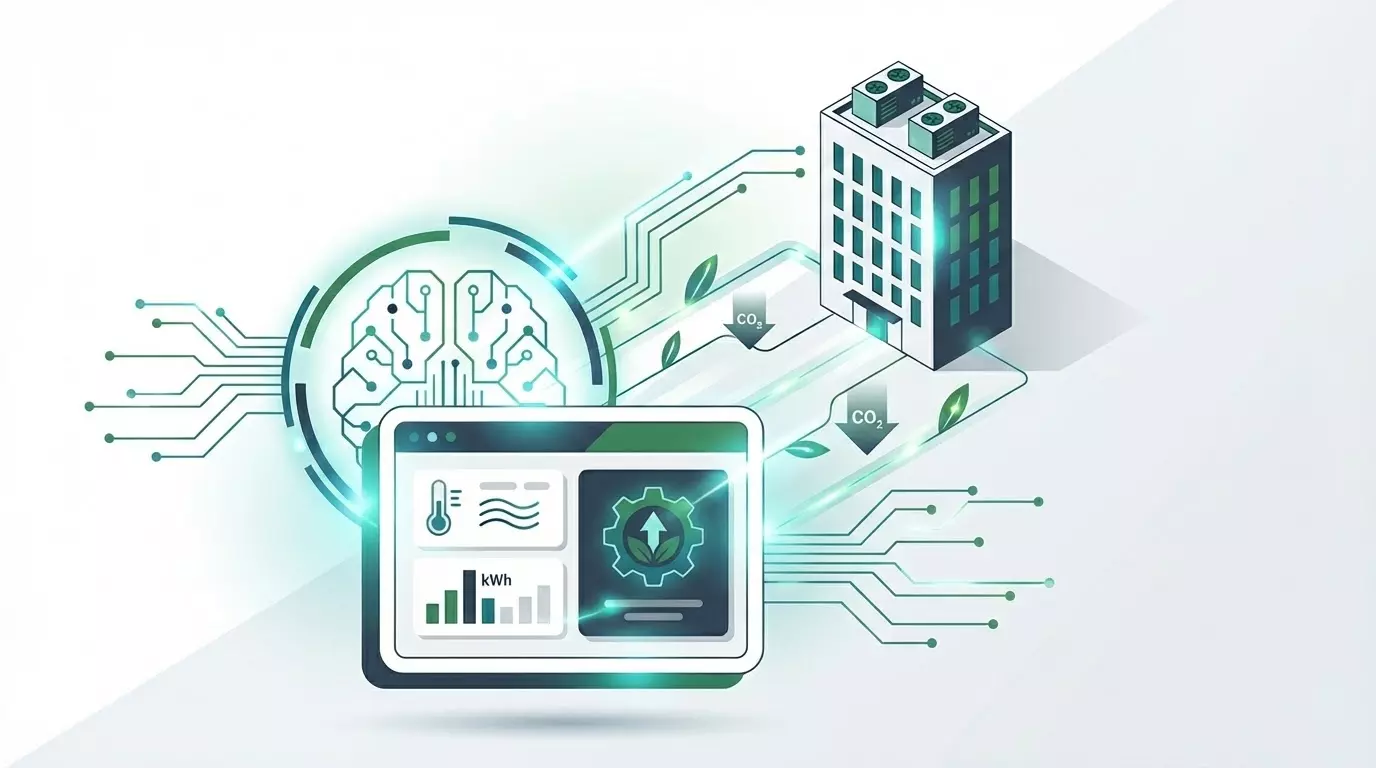
The Self-Learning Process of AI Systems
AI-driven HVAC optimisation algorithms operate through a continuous self-learning cycle, allowing them to adapt and improve over time. This process typically involves several phases:
Measure: Gathering data from various sensors, such as temperature and humidity.
Assess: Evaluating current conditions based on internal weather, thermal, and comfort models.
Predict: Forecasting the ideal temperature path based on environmental conditions.
Control: Adjusting setpoints and managing start/stop times to ensure comfort standards are met.
Learn: Utilizing a feedback loop from measurements to refine predictions and thermal models, leading to enhanced comfort and optimized operations.
This iterative learning enables the system to understand a building's thermal inertia, optimize start and stop times, and operate within efficient boundaries, preventing energy waste. The learning phase for these systems typically stabilizes within about 5 to 7 occupied days, after which they can effectively manage specific physical requirements of the zones.
Overcoming Adoption Barriers
While the potential of AI in HVAC energy optimisation is clear, its widespread adoption faces certain challenges. Implementing AI often requires reorganizing building workflows and ensuring that all levels of an organization are engaged with the new solutions. However, several factors are accelerating uptake:
- Increasing Availability and Falling Costs: The growing availability of AI products and their decreasing costs are making these solutions more accessible.
- Regulatory Pressure: Regulations are increasingly driving investor demand for AI to address energy efficiency challenges.
- Incentives: Government subsidies and green leases can lower cost barriers and encourage AI adoption.
Ultimately, AI is becoming a core facilitator for organizations aiming to achieve decarbonization goals and future-proof their assets. It represents a paradigm shift in building operations, requiring integration into processes and empowering people to unlock its full potential.
What’s ahead of us
AI is undeniably a transformative force in building energy management, particularly for HVAC energy optimisation. By enabling real-time data analysis, predictive maintenance, adaptive control, and continuous self-learning, AI systems deliver significant energy savings, reduce carbon emissions, and enhance occupant comfort. The ability of AI to balance efficiency with human needs, while adapting to dynamic environmental and operational conditions, positions it as an essential strategy for sustainable real estate. As AI technologies continue to evolve and become more accessible, their role in creating smarter, more efficient, and comfortable buildings will only grow, driving us closer to a future of truly sustainable urban environments.