

As a building owner, you're constantly looking for ways to reduce operating costs and improve your property's value. What if you could achieve significant energy savings with a low-cost, systematic tune-up? Here are the key takeaways on how retro-commissioning (RCx) can boost your existing building energy efficiency.
Key Takeaways of understanding Retro - commissioning (RCx)
- What is Retro-commissioning (RCx)? It's a systematic, cost-effective process of checking and optimizing your building's existing systems. Think of it as a tune-up, not a costly replacement of equipment.
- What's the Payoff? Past projects show that retro-commissioning (RCx) can reduce annual electricity consumption by about 5%. It also improves occupant comfort and enhances the reliability of your building's services.
- Is it Expensive? No. The process focuses on low-cost or no-cost adjustments and corrections. Because of this, the payback period for a retro-commissioning (RCx) project is often short, typically under 3 years.
- Is it a One-Time Fix? To maintain optimal performance and maximize benefits, it is recommended that the RCx process be repeated every 3 to 5 years.
The Problem: Hidden Inefficiencies in Your Building
Over time, buildings naturally drift from their optimal performance. This isn't due to a single major failure, but a series of small, often unnoticed, issues. Buildings undergo operational and occupancy changes, fine-tuning after repairs is neglected, and system set points become mis-adjusted. These minor deviations can have a significant impact on overall efficiency, causing buildings to waste energy. That is why aside from auditing projects, Regular Maintenance on your building systems and equipment are crucially important as well.
A retro-commissioning (RCx) project is designed to uncover these hidden problems. Common issues identified during an RCx investigation include:
- Simultaneous Heating and Cooling: Inefficient systems fighting each other in the same space.
- Incorrect Operating Hours: Air handling units (AHUs), lights, or other equipment operating outside of scheduled, occupied hours.
- Faulty Controls: Malfunctioning belts, valves, and dampers, or control system components that no longer respond to their prescribed sequences.
- Improper System Balancing: Leading to issues like a low temperature difference (Delta-T) in chilled water systems, which forces pumps and chillers to work harder than necessary.
These seemingly small problems accumulate, leading to significant energy waste, higher utility bills, and a less comfortable environment for occupants.
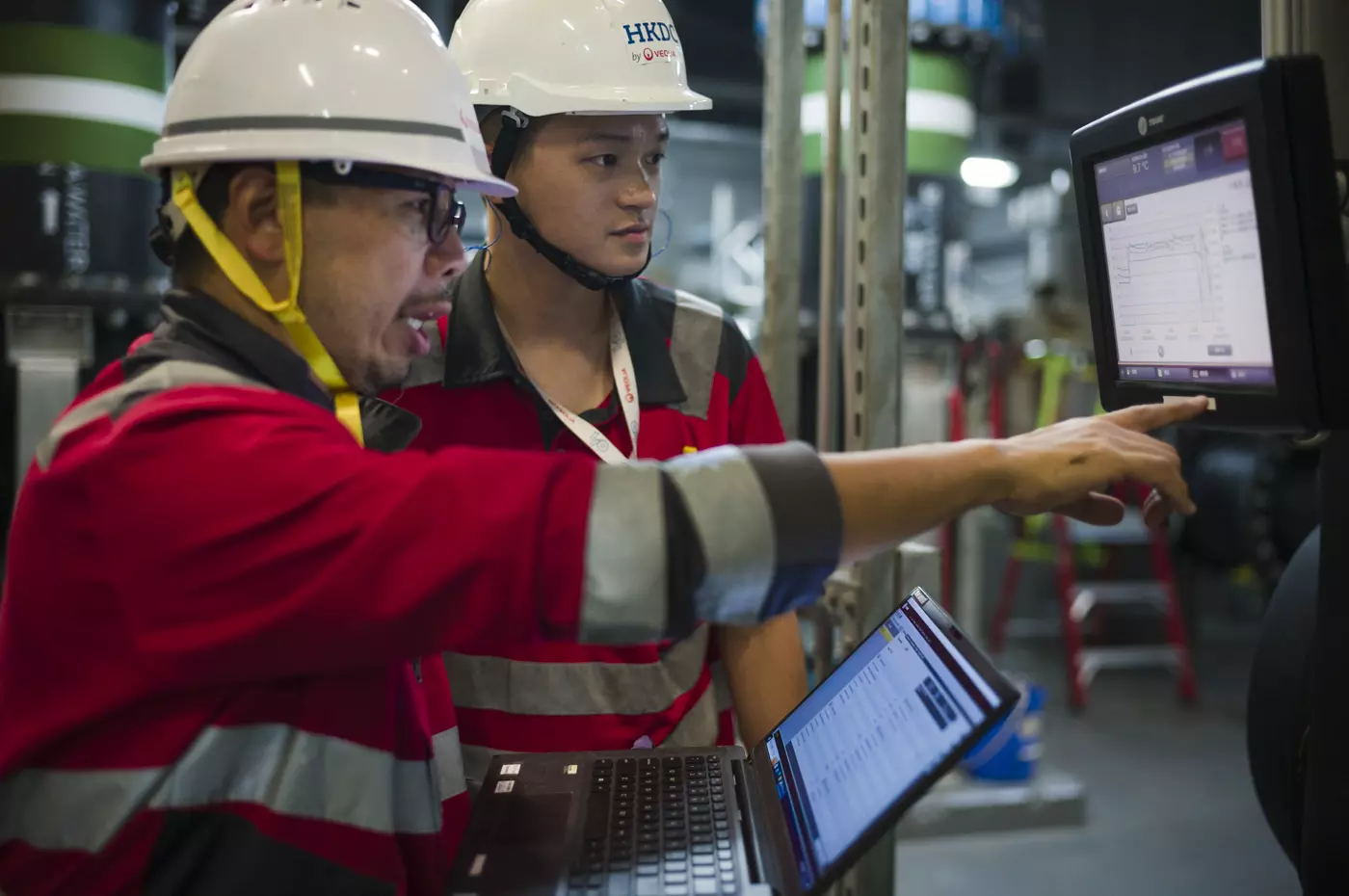
The Solution: A Systematic Tune-Up with Retro-commissioning (RCx)
This is where retro-commissioning (RCx) provides a solution. It is a systematic process to periodically check and improve an existing building's performance by identifying operational improvements. Unlike an energy audit, which often focuses on documenting potential capital-intensive upgrades, retro-commissioning (RCx) is about optimizing the equipment you already have. The scope is generally limited to non-capital intensive adjustments, corrections, and repairs, and the improvements are actually implemented and verified.
The process is typically broken down into four distinct stages:
- Stage 1 - Planning: This initial phase involves a thorough review of the building's documentation, utility bills, and current facility requirements. The RCx team conducts a walk-through and develops a detailed plan for the investigation.
- Stage 2 - Investigation: Here, the team performs in-depth analysis, collecting trend data from systems to identify the root causes of inefficiencies and quantify potential Energy Saving Opportunities (ESOs).
- Stage 3 - Implementation: The identified low-cost ESOs are implemented. A crucial part of this stage is Measurement and Verification (M&V), where the team collects post-implementation data to verify the actual energy savings.
- Stage 4 - Ongoing Commissioning: To ensure the benefits are sustained, an ongoing commissioning plan is developed. This plan provides a roadmap for maintaining the improvements and often includes continuous monitoring of key performance indicators (KPIs).
Ensuring a Successful RCx Project: The Who, How, and What to Watch For
To get the most out of a retro-commissioning (RCx) project, it's crucial to have the right team and a clear process.
What Should Building Owners Watch Out For?
Embarking on a retro-commissioning (RCx) project can be highly rewarding, but success depends on careful management. Here are key points to consider:
- Define Clear Objectives: Before you begin, know what you want to achieve. The planning stage is critical for developing a clear RCx plan that outlines the scope and goals.
- Insist on Measurement and Verification (M&V): This is what separates RCx from a simple checklist. Ensure you agree on the M&V methodology before implementation begins. This is how you will verify the predicted results and prove the project's ROI.
- Don't Treat it as a One-Off: Building performance naturally deteriorates over time. The real value of retro-commissioning (RCx) is realized when it becomes part of a long-term strategy. An ongoing commissioning plan is essential to ensure that the savings and efficiencies you gain are maintained.
- Understand the Scope and Cost: While RCx is low-cost compared to major retrofits, there is no single definite cost. The price will relate to the scale and complexity of your building's systems. Work with your provider to determine a scope and budget that fits your needs.
Who Can Perform RCx?
While your in-house team can be involved, a professional RCx project is best led by qualified experts. Organizations like the Hong Kong Green Building Council (HKGBC) have established a formal RCx Training and Registration Scheme to ensure a high standard of practice. When engaging a service provider, look for these recognized qualifications:
- RCx Practitioner (Level 1): A technician-level practitioner who assists in the RCx process and helps maintain the energy efficiency of building systems.
- RCx Practitioner (Level 2): An engineering-level professional who is actively involved in the RCx process and is responsible for keeping building facilities operating at high efficiency.
- RCx Professional: The highest level of qualification. This is an institutional professional with in-depth knowledge of building energy efficiency who can manage the entire RCx process, from planning and investigation to implementation and M&V. To achieve this status, they must have extensive experience, be a full member of a professional engineering body, and have a proven track record of carrying out at least two RCx projects.
Engaging a registered RCx Professional ensures your project is led by someone with verified expertise and who is bound by a professional code of conduct.